Overview
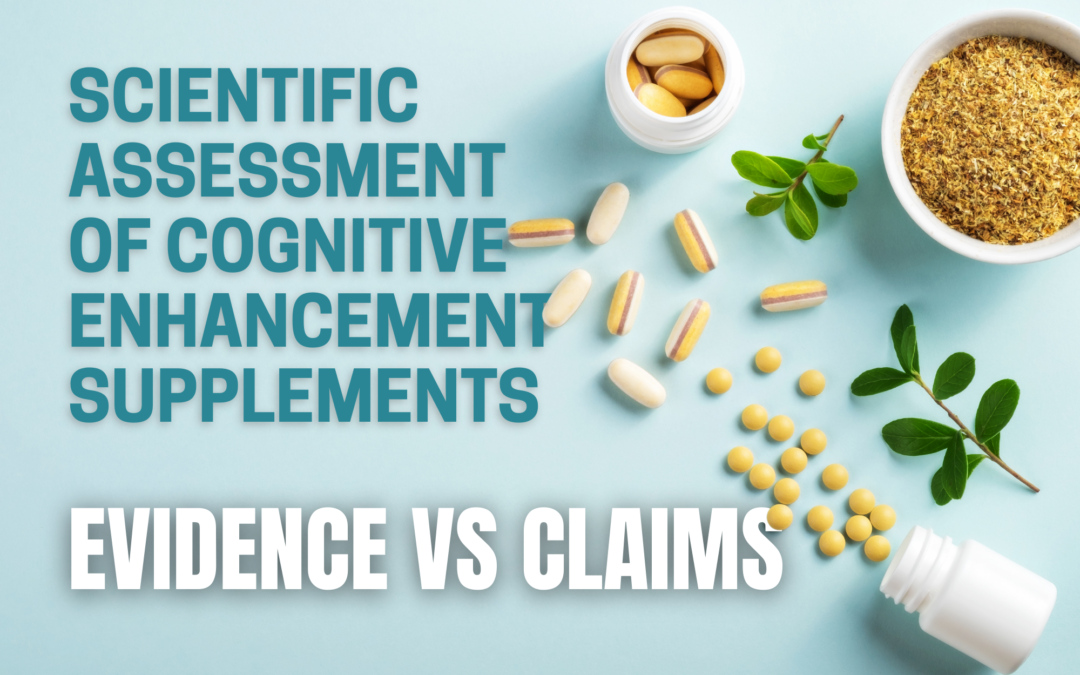
Neurolaunch.com presents various supplements marketed for cognitive enhancement. This scientific review assesses each recommendation based on the latest peer-reviewed literature, clarifying where claims are well-supported and where caution or skepticism is warranted. I thought it would be good to share:
Omega-3 Fatty Acids
Assessment: Partially Supported
- Meta-analyses suggest benefits in individuals with mild cognitive impairment (CIND), not healthy adults or those with Alzheimer’s.
- Dose-dependent benefits appear at >500 mg/day DHA + EPA.
- Some studies report executive function improvement in middle-aged and elderly with low dietary intake.
✅ Supported for prevention; not therapeutic in established dementia.
B-Complex Vitamins
Assessment: Mixed Evidence
- B vitamins support neurotransmitter synthesis and homocysteine regulation.
- Folate shows strongest association with reduced dementia risk.
- B12/B6 evidence remains inconsistent in isolation.
✅ Folate is the standout; early, long-duration intervention is key.
Vitamin C
Assessment: Strongly Supported
- Higher plasma levels correlate with better cognitive performance (recall, focus, recognition).
- Antioxidant function protects against neuronal oxidative damage.
✅ Robust evidence supports its protective role.
Vitamin D
Assessment: Association Confirmed, Efficacy Weak
- Low vitamin D correlates with cognitive decline (OR ≈ 1.24).
- Supplementation shows no consistent cognitive improvement in trials.
⚠️ Association ≠ causation. Intervention benefit unproven.
Ginkgo Biloba
Assessment: Limited Support
- Combined with donepezil, it enhances memory outcomes.
- Standalone effects are weak or inconsistent.
⚠️ Website overstates benefits without clarifying combination therapy context.
Bacopa Monnieri
Assessment: Modest, Inconsistent Evidence
- Meta-analyses show small improvements in memory and processing speed.
- Results vary across populations and test types.
⚠️ Potentially helpful, but results lack reproducibility.
Panax Ginseng
Assessment: Memory-Specific, Mixed Results
- Minor memory improvement (SMD = 0.19); not effective for overall cognition or attention.
- Long-term use (>5 years) may yield more impact.
⚠️ Claims are directionally correct but exaggerated in scope.
Rhodiola Rosea
Assessment: Promising in Animals, Not in Humans
- Shown to improve memory in rodents under stress.
- Human trials are sparse and inconclusive.
❌ Animal data ≠ clinical recommendation.
Acetyl-L-Carnitine (ALCAR)
Assessment: Well-Supported
- Meta-analyses confirm benefit for mental energy, attention, and memory.
- Positive effects in both clinical and psychometric measures.
✅ One of the most reliably supported supplements.
Conclusion: Evidence Spectrum
| Supplement | Support Level | Notes |
| Vitamin C | Strong | Neuroprotection, cognition |
| Acetyl-L-Carnitine | Strong | Energy, memory |
| Omega-3 | Moderate | Preventative use only |
| Folate (B9) | Moderate-Strong | Early intervention |
| Panax Ginseng | Modest | Memory-specific |
| Bacopa Monnieri | Weak-Modest | Inconsistent findings |
| Ginkgo Biloba | Weak | Only effective with donepezil |
| Vitamin D | Weak | No benefit from supplementation |
| Rhodiola Rosea | Not Supported | Only animal data |
Clinical Recommendation
While some supplements show promise—particularly vitamin C, acetyl-L-carnitine, and folate—many claims on Neurolaunch.com overstate certainty or omit limitations. Readers should view these supplements as adjuncts rather than standalone solutions and consult a healthcare provider before use, especially if taking medications.
Lifestyle interventions (physical activity, diet, sleep, cognitive training) remain the foundation of brain health.