
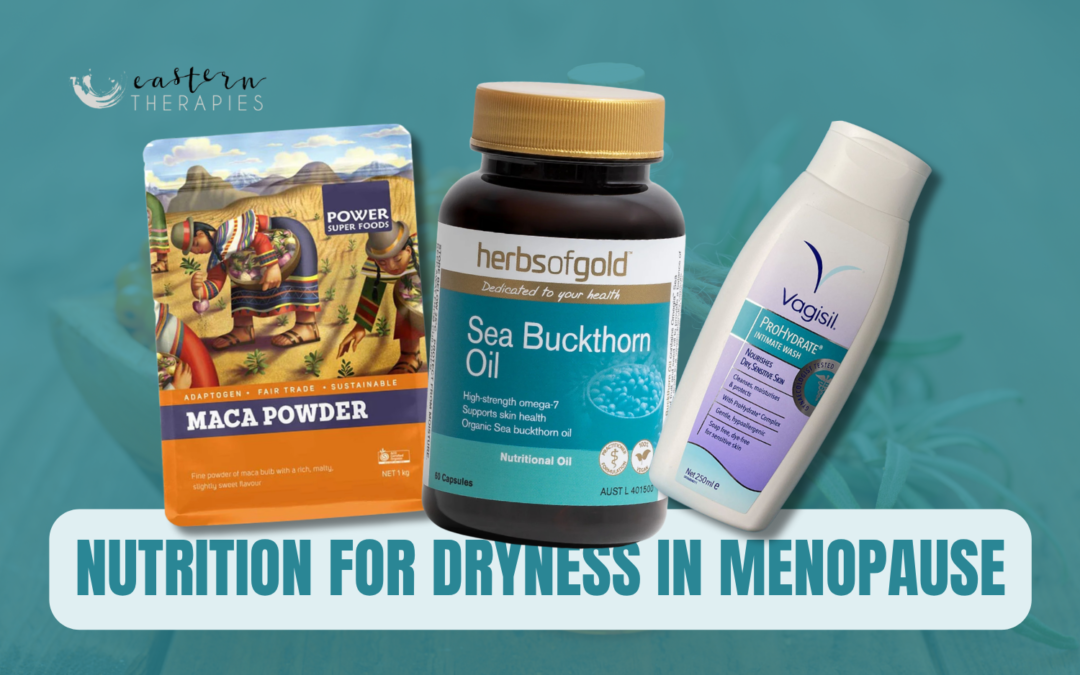
You mention it in passing at your GP appointment — dryness, maybe in your eyes, maybe your skin, maybe somewhere you’d rather not go into detail about — and you get a nod and a suggestion to try a moisturiser. It’s one of the most common symptoms of perimenopause and menopause, and one of the least talked about. Most women aren’t told that nutrition is an area researchers are actually looking at seriously for this.
Two compounds keep coming up in the clinical literature: sea buckthorn oil and maca root. They work differently, and neither is a fix-all, but the research on both is worth knowing about if dryness is something you’ve been living with quietly.
Sea Buckthorn Oil: Where the Research Points
Think of sea buckthorn oil as a concentrated source of the fats your skin and mucous membranes rely on to stay hydrated and resilient — a bit like topping up the oil in an engine that’s been running dry. The small orange berries contain a rare plant source of omega-7, alongside omega-3, omega-6, omega-9, vitamin E compounds and antioxidants.
In clinical trials, sea buckthorn oil has been linked to improvements in vaginal dryness and comfort in postmenopausal women, better tear film stability in people with dry eye, and improved skin hydration and elasticity with regular use.
Maca Root: Where It May Help
Maca is a traditional Andean root more often associated with libido and energy than dryness specifically. Its relevance here is narrower — the clinical research on maca has mostly looked at sexual function and comfort in postmenopausal women, particularly where antidepressant use has affected that side of things, rather than dryness on its own.
Where This Fits Into Your Care
Dryness during this stage of life is rarely just one thing. Hormonal shifts, medication, stress and how well your nervous system is regulating all play a part, and they interact with each other. Nutritional options like sea buckthorn oil and maca may be considered as part of a broader naturopathic care plan, alongside acupuncture and Chinese medicine approaches that look at the whole picture rather than one symptom in isolation. The right approach and dose depend on you.
If dryness in menopause is something you’ve been navigating on your own, it’s worth having a proper conversation about your options. Book a naturopathy or acupuncture consultation at Eastern Therapies in Bondi Junction.
For Those Who Want the Research
Sea buckthorn oil and vaginal dryness. In a randomised, double-blind, placebo-controlled trial of 116 postmenopausal women (Larmo et al., 2014, Maturitas), participants took 3 g/day of sea buckthorn fruit and seed oil for three months. The active group showed improved vaginal epithelial integrity compared with placebo, with no evidence the effect worked via oestrogen receptors.
Broader trial data. A 2024 randomised controlled trial (Chan et al., Journal of Functional Foods) tracked oral sea buckthorn oil across skin, blood markers, eye comfort and vaginal health over 12 weeks. Skin and blood parameters improved significantly, and participants self-reported relief from dry eyes and vulvar symptoms via questionnaire.
Dry eye and skin. Separate trials have linked sea buckthorn oil to better-preserved tear film stability in people with dry eye, and to improved skin hydration, elasticity and collagen density with regular use.
Maca and antidepressant-related sexual dysfunction. A 2015 double-blind, placebo-controlled trial (Dording et al., Evidence-Based Complementary and Alternative Medicine) gave 45 women with SSRI/SNRI-induced sexual dysfunction 3.0 g/day of maca for 12 weeks. Remission rates were modestly higher in the maca group than placebo, and the benefit was concentrated in the postmenopausal subgroup.


