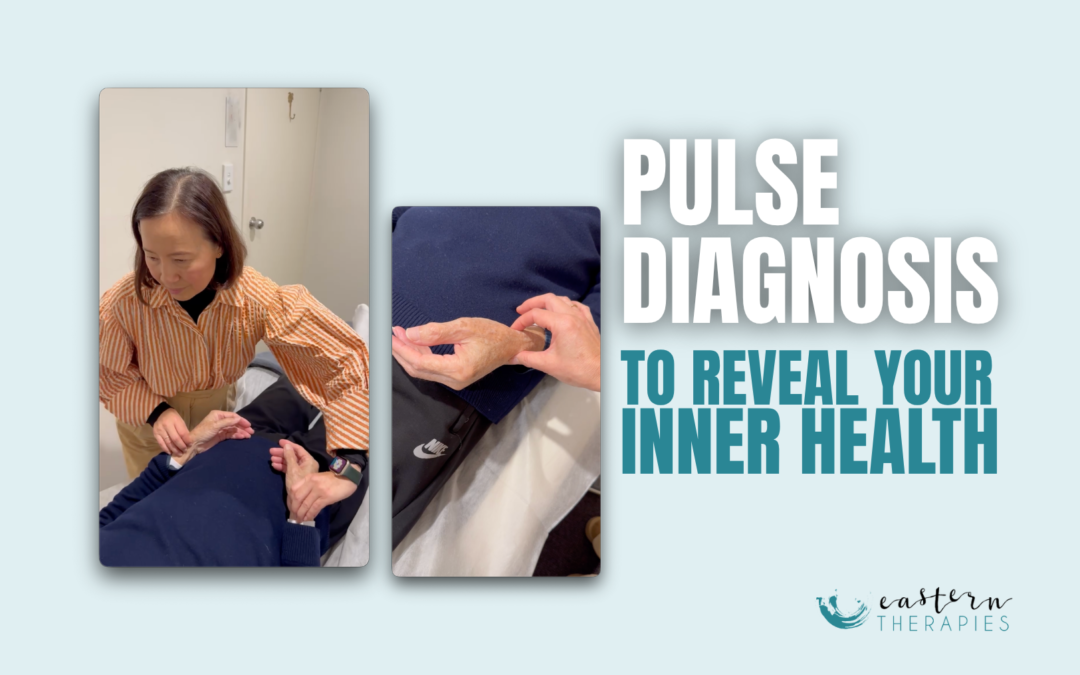
In Chinese medicine, your pulse is far more than a simple heartbeat—it is a refined diagnostic tool that offers a detailed picture of your internal health. While Western medicine often uses the pulse to measure heart rate and rhythm, traditional Chinese medicine (TCM) looks much deeper. By feeling the pulse at different positions and depths on the wrist, a skilled practitioner can gather insights about your energy levels, digestion, sleep, emotional state, and overall balance of yin and yang.
This is why pulse diagnosis in Chinese medicine is considered one of the most important foundations of treatment. Rather than treating only the symptom—such as insomnia, anxiety, fatigue, or digestive discomfort—Chinese medicine focuses on understanding the specific pattern of imbalance causing these issues. The pulse is one of the clearest ways to identify that pattern.
What Is Pulse Diagnosis in Chinese Medicine?
In Chinese medicine, the pulse is felt at three main positions on each wrist, and at three depths: superficial, middle, and deep. Each position is associated with different organs and functions in the body. The practitioner is not just counting beats per minute; they are feeling for qualities such as:
- Strength or weakness
- Speed (fast or slow)
- Depth (floating or deep)
- Shape and texture (wiry, slippery, choppy, thin, etc.)
These pulse qualities form a kind of “language” that reflects how qi (energy), blood, fluids, yin, and yang are moving—or getting stuck—in the body. For example, a wiry pulse might be associated with tension, stress, or pain. A weak, thin pulse may indicate deficiency or depletion. A slippery pulse can relate to digestive issues, dampness, or phlegm.
Why Pulse Diagnosis Matters for Your Treatment
One of the key strengths of Chinese medicine is its individualized approach. Two people may both come in with headaches, poor sleep, or bloating, but the root causes can be completely different. Without pulse diagnosis and other observations, they might receive the same general treatment. With pulse diagnosis, however, their care becomes much more targeted.
For instance, one person’s insomnia may be driven by excess heat and agitation, while another’s stems from blood or yin deficiency. Both are “insomnia,” but they require very different strategies. Pulse diagnosis helps the practitioner decide:
- Which herbal formula best matches your pattern
- Which acupuncture points will be most effective
- Whether the body is more depleted or overactive
- Where yin and yang are out of balance
- How to prioritise treatment over the coming weeks
In this way, Chinese medicine pulse diagnosis improves precision. It helps ensure that the herbs, acupuncture, and lifestyle recommendations are not just appropriate for your symptom, but appropriate for you.
The Art and Skill Behind Pulse Diagnosis
Pulse diagnosis is not a quick technique you can learn in a weekend course. It is a clinical art that requires sensitivity, training, and ongoing refinement. Many practitioners spend years, even decades, studying different pulse systems and comparing what they feel in the pulse with what they observe in their patients.
Over time, this practice builds a kind of “pulse intuition,” backed by careful study and clinical experience. The practitioner learns to trust what the pulse is saying and to see how changes in the pulse correspond with improvements in sleep, digestion, mood, pain, and overall wellbeing.
This is also why regular treatments can be so valuable. When your practitioner feels your pulse over multiple sessions, they can track how your internal state is shifting. Is your energy becoming more rooted? Is heat calming down? Is the overall quality of the pulse becoming stronger, smoother, and more balanced? These small changes can show that the body is moving in the right direction—even before you notice big shifts on the surface.
What Your Pulse Can Reveal About Your Health
Many people are surprised by how much their pulse can reveal. During a Chinese medicine consultation, pulse diagnosis may offer insight into:
- Stress levels and how your body is holding tension
- The strength of your digestive system
- The quality of your sleep and recovery
- Circulation and warmth in the body
- Underlying deficiency or excess patterns
- The relationship between your physical and emotional health
Rather than being a separate, abstract measurement, the pulse is woven into the full picture of your health. It is considered alongside your symptoms, tongue appearance, medical history, lifestyle, and emotional state.
Experience Pulse Diagnosis for Yourself
Reading about pulse diagnosis in traditional Chinese medicine can be fascinating, but its real power comes when you experience it directly. A skilled practitioner will not only feel your pulse but also explain, in clear and accessible language, what they are noticing and how it relates to your health concerns.
If you are looking for a more personalised, holistic way to understand your body, support your healing, and restore balance, pulse diagnosis is a powerful place to start.
Experience what your pulse can reveal—book your consultation today at Eastern Therapies and discover how Chinese medicine can support your health from the inside out.