
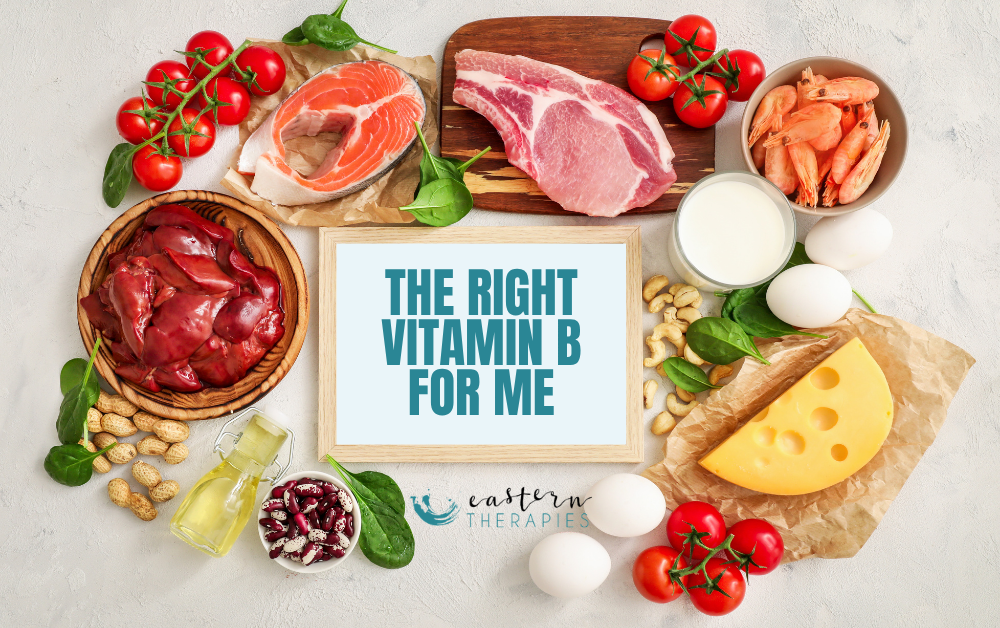
Support Stress, Energy and Nerves Naturally
If you work long hours, feel constantly “on the go,” or are under ongoing stress, your body is likely burning through its B vitamins. At Eastern Therapies, we often see busy professionals, parents and students who feel tired, wired, and overwhelmed – and a targeted B‑complex can be a simple, effective way to support their nervous system and energy.
B vitamins are water‑soluble, which means they are not stored in the body like fat‑soluble vitamins A, D, E and K. They must be regularly replaced. For best absorption and to maintain steady energy, it’s ideal to take your B complex after breakfast and lunch with water – not with tea or coffee, which can interfere with absorption.
The B‑group vitamins work best as a team. A deficiency in one B vitamin can quickly affect the others. Below is a clear guide to each key B vitamin, what it does, and when you might need extra support.
Vitamin B1 (Thiamine): Energy from Carbs and Brain Support
Vitamin B1 helps your body convert carbohydrates into usable energy and supports healthy production of stomach acid for proper digestion. It also plays an important role in healthy brain and nerve function.
Common signs of low B1 can include:
- Fatigue and low energy
- Low mood or depression
- Numbness, tingling, or “pins and needles” in the hands and feet
Certain lifestyle factors increase your need for thiamine, including over‑consumption of antibiotics, caffeine and alcohol, and a high‑carbohydrate diet. Alcohol dependence is strongly associated with B1 deficiency because thiamine is needed to break down alcohol.
Food sources of B1 include brown rice, wheat germ, wholemeal bread and pasta, legumes and pork.
Vitamin B2 (Riboflavin): Energy and Eye Health
Ever noticed your urine turning bright yellow after taking a B complex? That glow is usually from vitamin B2 – a sign it has been absorbed into the bloodstream and then excreted via the kidneys.
Riboflavin is vital for:
- Energy production
- Converting vitamins B6 and folate into their active forms
- Supporting healthy eye function
Deficiency may show up as:
- Cracks or sores around the corners of the mouth
- A sore, inflamed tongue
- Flaky skin or dermatitis
- Fatigue
Good food sources include dairy products, cheese, milk, legumes, almonds and green leafy vegetables. The elderly and people who drink heavily are at higher risk of B2 deficiency due to reduced absorption.
Vitamin B3 (Niacin): Stress, Metabolism and Cholesterol
Vitamin B3 (niacin and niacinamide) has a powerful effect on:
- Stress resistance
- Hormone and blood sugar regulation
- Cholesterol and cardiovascular health
Niacin can help improve circulation and may help slow the progression of atherosclerosis and heart disease when used appropriately.
Rich food sources include beef liver, brewer’s yeast, fish, salmon and sunflower seeds.
After taking niacin supplements, some people experience a short‑lived “niacin flush” – a warm, tingling, red sensation on the skin. This is usually harmless and settles within minutes.
Vitamin B5 (Pantothenic Acid): The Classic “Anti‑Stress” Vitamin
The name pantothenic comes from the Greek “pantos,” meaning “everywhere,” because this vitamin is widely available in foods such as whole‑grain cereals, eggs, fish and green leafy vegetables.
B5 is one of the best‑known anti‑stress nutrients and features in many stress support formulas because it:
- Helps support and strengthen the nervous system
- Assists your body in responding to ongoing stress
- Plays a role in the production of melatonin, the sleep‑regulating hormone secreted by the pineal gland
- Helps your body process CoEnzyme Q10
Signs of deficiency can include fatigue, headaches, digestive upset and lowered immune resilience.
Vitamin B6 (Pyridoxine): PMS, Mood and Nerve Health
Vitamin B6 is well‑known among women for its role in easing monthly PMS symptoms, including:
- Fluid retention
- Breast tenderness
- Mood changes
Beyond hormonal support, B6 is crucial for:
- Healthy nervous system function
- Production of neurotransmitters (chemical messengers in the brain)
- Formation of red blood cells
Low B6 may be associated with depression, numbness or tingling in the hands and feet, and general nervous system symptoms.
Food sources include wholegrains, oily fish, avocados and bananas. B6 is also commonly used to ease nausea in early pregnancy and may help some people with carpal tunnel symptoms.
Vitamin B12 (Cobalamin): Blood, Brain and Heart Protection
Vitamin B12 plays a central role in:
- Red blood cell formation
- DNA and RNA production
- Energy metabolism
- Controlling homocysteine levels (important for heart health and reducing cardiovascular risk)
Dietary sources are mainly animal‑based, including organ meats (such as liver) and dairy products. Because absorption of B12 can be tricky, it is often best taken in sublingual form (under the tongue) or via injection when levels are low.
People most at risk of B12 deficiency include:
- Older adults
- Vegetarians and vegans
- Those with compromised digestion or absorption
Common deficiency signs include fatigue, memory problems, low mood, anaemia and a sore “beefy” red tongue.
Why a High‑Quality B Complex Matters
Your body is remarkably intelligent in how it uses vitamins. However, modern lifestyles – long hours, stress, processed food, caffeine and alcohol – can quickly deplete B vitamins faster than diet alone can replace them.
Overall, B vitamins are essential for:
- Coping with physical and emotional stress
- Supporting steady energy
- Maintaining a healthy nervous system
- Supporting healthy digestion and muscle tone in the gastrointestinal tract
- Supporting brain and cognitive function
Many of the reactions B vitamins support are enzyme‑driven. At Eastern Therapies, we use a Super B formula that contains activated B6 (pyridoxal‑5‑phosphate) – the biologically active form – with an added phosphate group so your body can use it straight away. Activated B vitamins improve bioavailability, which means you get more benefit from each dose.
Lifestyle Tips to Boost the Benefits of Your B Vitamins
Nutritional support works best alongside simple, sustainable lifestyle changes. To support your energy, mood and nervous system:
- Reduce stimulants such as tea and coffee, especially later in the day, as too much caffeine can lead to restlessness and insomnia.
- Move your body regularly to encourage the production of natural “feel‑good” hormones.
- Soak in a warm bath with Epsom salts to soothe tired, sore muscles.
- Diffuse or burn lavender essential oil in the evening to encourage relaxation and deep rest.
Small, consistent changes can have profound benefits over time.
Need Help Choosing the Right B Vitamin Support?
Everyone’s health history, diet and stress levels are unique. If you’re not sure which B formula is right for you – or you suspect you might be deficient – a personalised consultation can help.
At Eastern Therapies, naturopath Anastasia Zafiropoulos uses her Bachelor of Health Science (Complementary Therapies) and clinical experience to support:
- Nervous system health
- Skin health
- Stress, fatigue and sleep issues
- Hormonal balance and mood
If you’d like tailored advice on B vitamins, stress and energy support, you can book a naturopathic consultation at Eastern Therapies and explore a plan that’s right for you.
Go on, relax, unwind – and start enjoying the benefits of better B vitamin support and good health.