The science behind glutathione and fertility — and why it changes everything
If you are trying to conceive — naturally or through IVF — you have probably researched how to improve egg quality, support hormone balance, and reduce the oxidative stress that quietly undermines reproductive health. One supplement consistently appears in the research, yet rarely gets the attention it deserves: glutathione. And one popular alternative — NAC — may actually be working against you. More on that below.
At Eastern Therapies in Bondi Junction, we combine fertility acupuncture, targeted supplementation, and low-level laser therapy to support patients through every stage of their fertility journey. Glutathione is a core part of what we recommend — and here is exactly why.
What is Glutathione and Why Does It Matter for Fertility?
Glutathione is the body’s most powerful antioxidant, produced inside virtually every cell. Known as the “master antioxidant,” it neutralises the free radicals that damage eggs, sperm, and embryos — and it recharges vitamins C and E so the entire antioxidant system keeps working.
Oxidative stress — when free radical production overwhelms antioxidant defences — is now recognised as a key driver of:
- Poor egg quality and chromosomal errors
- Low sperm motility, DNA fragmentation, and poor morphology
- Reduced IVF success rates
- Conditions including PCOS, endometriosis, and unexplained infertility Glutathione stands at the centre of your body’s defence against all of it.
How Glutathione Improves Egg Quality
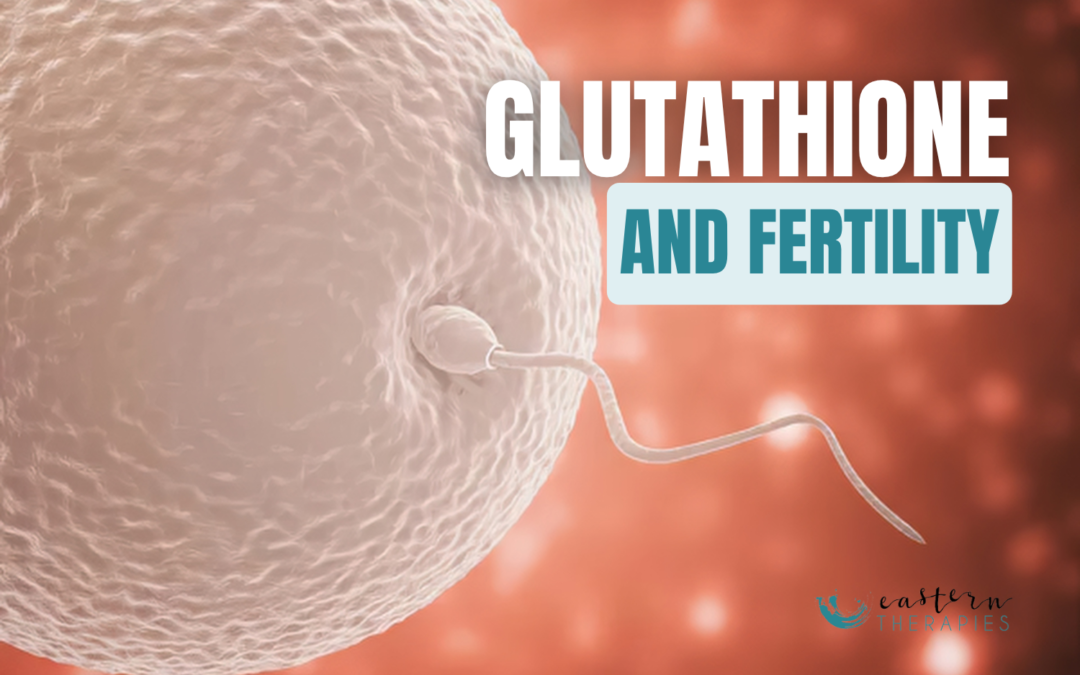
Human eggs contain more mitochondria than any other cell in the body — up to 600,000. This intense energy production generates free radicals as a byproduct. Glutathione is the molecule that neutralises those free radicals before they can damage the egg’s DNA or disrupt chromosome division.
Research is clear: eggs with higher intracellular glutathione levels produce stronger embryos with better implantation potential. Women undergoing IVF whose follicular fluid contains higher glutathione concentrations have measurably higher fertilisation rates. After 35, ovarian glutathione levels decline — one of the primary reasons egg quality drops with age.
For anyone asking how to improve egg quality for IVF, glutathione is one of the most evidence-backed answers available.
The Male Fertility Picture
Sperm cells are highly vulnerable to oxidative damage. Low glutathione in sperm is directly linked to reduced motility, DNA fragmentation, poor morphology, and lower sperm count. Clinical studies show that men supplementing with glutathione during infertility treatment demonstrate meaningful improvements in sperm parameters — an often overlooked factor in IVF and ICSI outcomes.
How to Boost Glutathione Naturally
Support your body’s own production by eating sulphur-rich foods: garlic, onions, broccoli, cauliflower, eggs, and high-quality whey protein. Key cofactors — vitamin C, vitamin E, selenium, and alpha-lipoic acid — work alongside glutathione and should be part of any comprehensive fertility supplement protocol.
What depletes it:
- Chronic stress
- Alcohol
- Environmental toxins (plastics, heavy metals, pesticides)
- Certain medications including paracetamol
- Poor diet
- Ageing
Begin supplementing at least three months before conception or egg retrieval — the time it takes for a new cohort of eggs to complete their development cycle.
Why We Switched from NAC to Glutathione — and You Should Too
Here is something we tell almost every new fertility patient at Eastern Therapies, because it surprises most of them.
We used to recommend NAC (N-acetylcysteine) for fertility support. We don’t anymore.
NAC has long been promoted as a glutathione precursor — a way to raise glutathione levels indirectly. And while it does have clinical uses, there is a significant problem with recommending it specifically for fertility: NAC is a natural drying agent.
Clinically, we use NAC when someone has congestion on the lungs or a phlegmy chest — because it dries out mucus secretions. That is exactly what it is designed to do. The issue is that when women take it as a fertility supplement, it does the same thing systemically. It dries out cervical fluid. It dries out the oestrogen-rich environment that is essential for conception.
Why this matters:
Cervical fluid is not a side issue in fertility — it is the medium that keeps sperm alive and guides them toward the egg.Oestrogen drives the lining that an embryo needs to implant. Drying either of these out is the last thing anyone trying to conceive should be doing.
This is one of the most common supplement swaps we make with patients at Eastern Therapies. If you have been taking NAC as part of a fertility protocol, it is worth having a conversation about whether liposomal glutathione is a more appropriate choice for your goals.
Fertility Support at Eastern Therapies, Bondi Junction
At Eastern Therapies, our integrative fertility approach combines:
- Fertility acupuncture to improve blood flow to the ovaries and uterus
- Low-level laser therapy (LLLT/photobiomodulation)to energise mitochondrial function in eggs and uterine tissue
- Targeted fertility supplements including liposomal glutathione, CoQ10, omega-3s, melatonin, and NMN
- Personalised guidance for women navigating natural conception, IVF preparation, PCOS, endometriosis, and unexplained infertility
Whether you are just beginning your fertility journey or preparing for an IVF cycle, we are here to support your body from the inside out.
Ready to take the next step?
Book a fertility consultation with our team at Eastern Therapies Bondi Junction today.
easterntherapies.com.au | Bondi Junction, SydneyNSW
Your fertility story isn’t over. Your cells are not beyond reach — they may simply need the right environment to thrive.